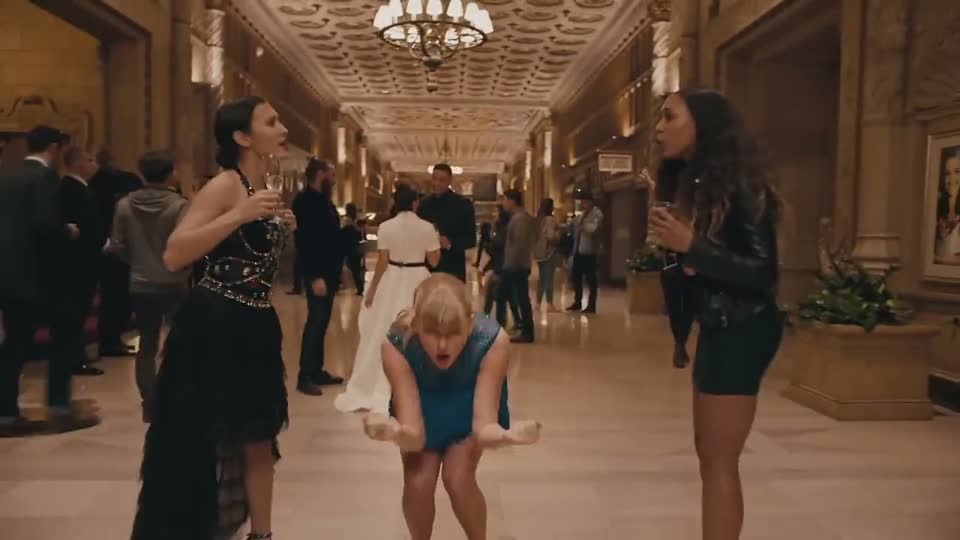
Ghostbusters · 1984
The Biltmore appears as part of the Sedgewick Hotel sequence. Your guide connects the film’s comic chaos with the real hotel’s grand spaces.
 CITY LAYERTOURS · NEW YORK & LOS ANGELES
Biltmore Hotel · films & smart glasses
Ghostbusters, Fight Club and Chinatown meet the ornate interiors of a Los Angeles landmark. A one-hour guided film-history experience, with clips viewed through smart glasses.
Choose your language and rate in Bókun. Availability and final price confirmed before payment.
SMART GLASSES · MOVIES & ARCHIVES
The same idea as New York: at viewing stops, your guide shares movie clips and archives in the smart glasses, connected to the room around you.
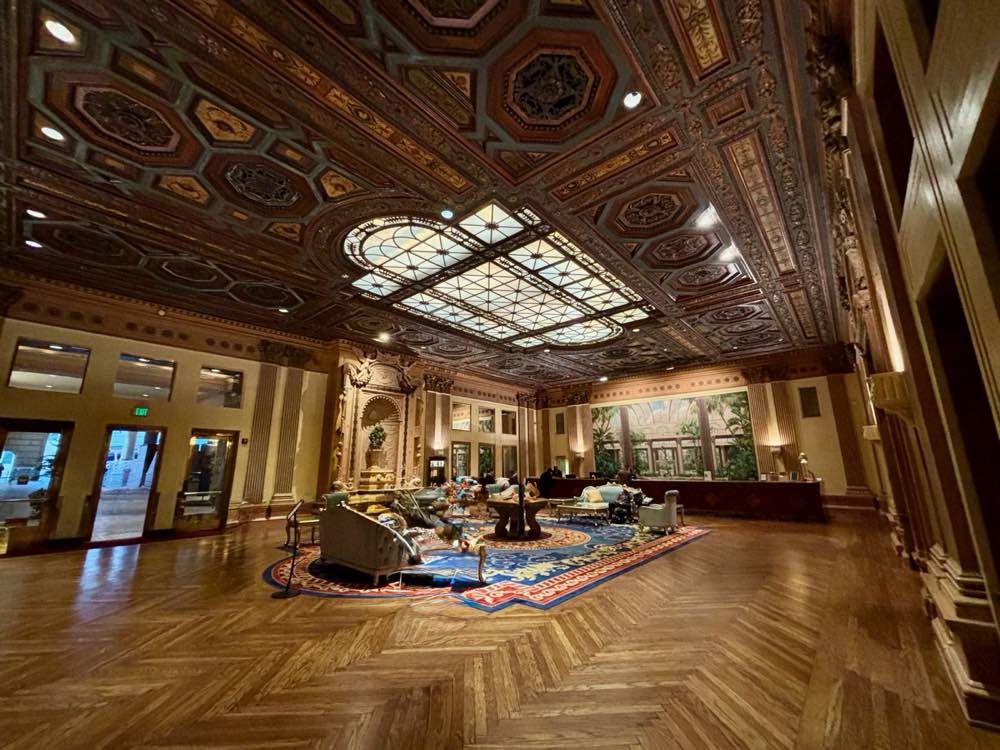
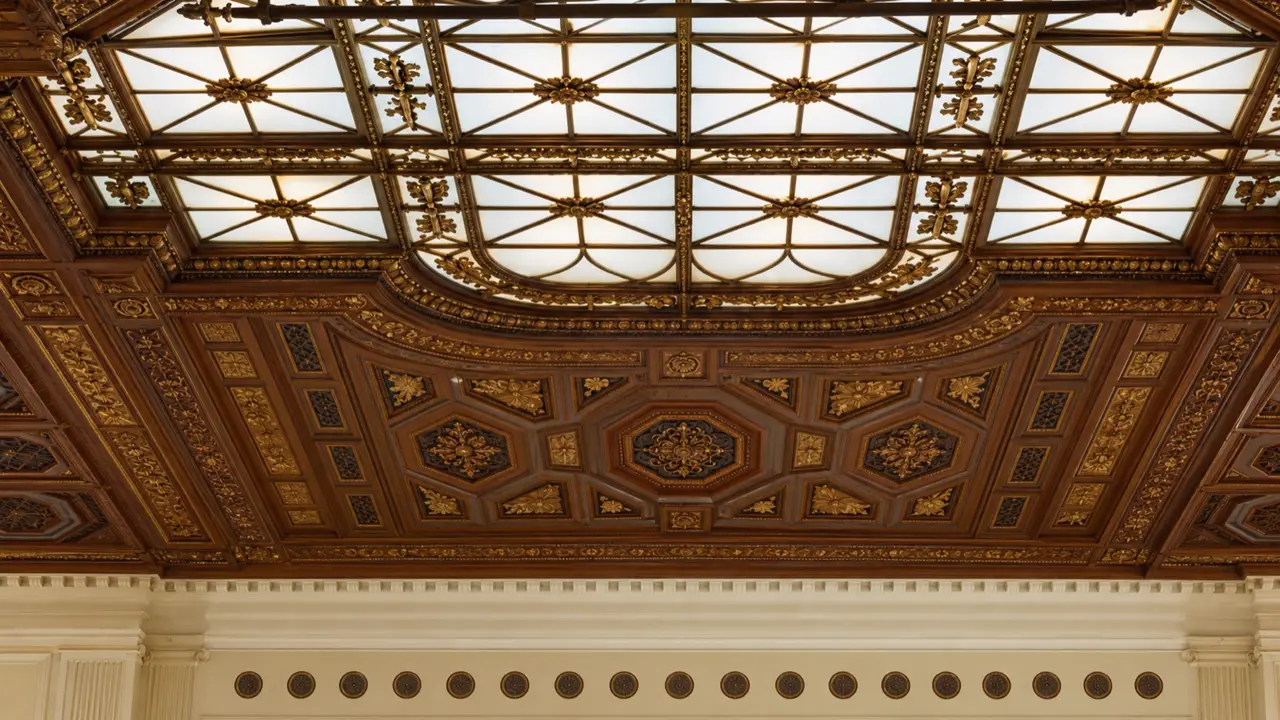 Biltmore · Music Room
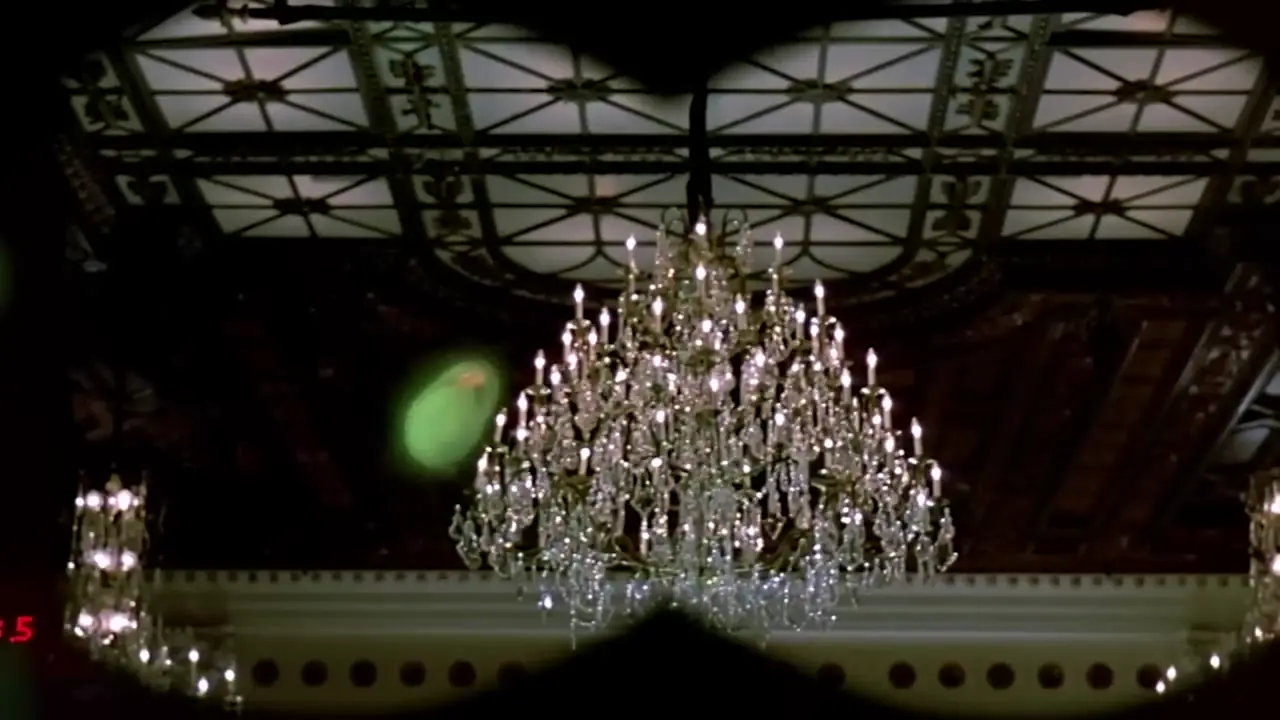
Look up. The oval skylight and its lattice connect the Music Room with a fleeting moment from Ghostbusters.
Original 1.5-second film excerpt from the CLT Drive collection. Clean contemporary framing generated from that view and the room photo; approximate architectural comparison.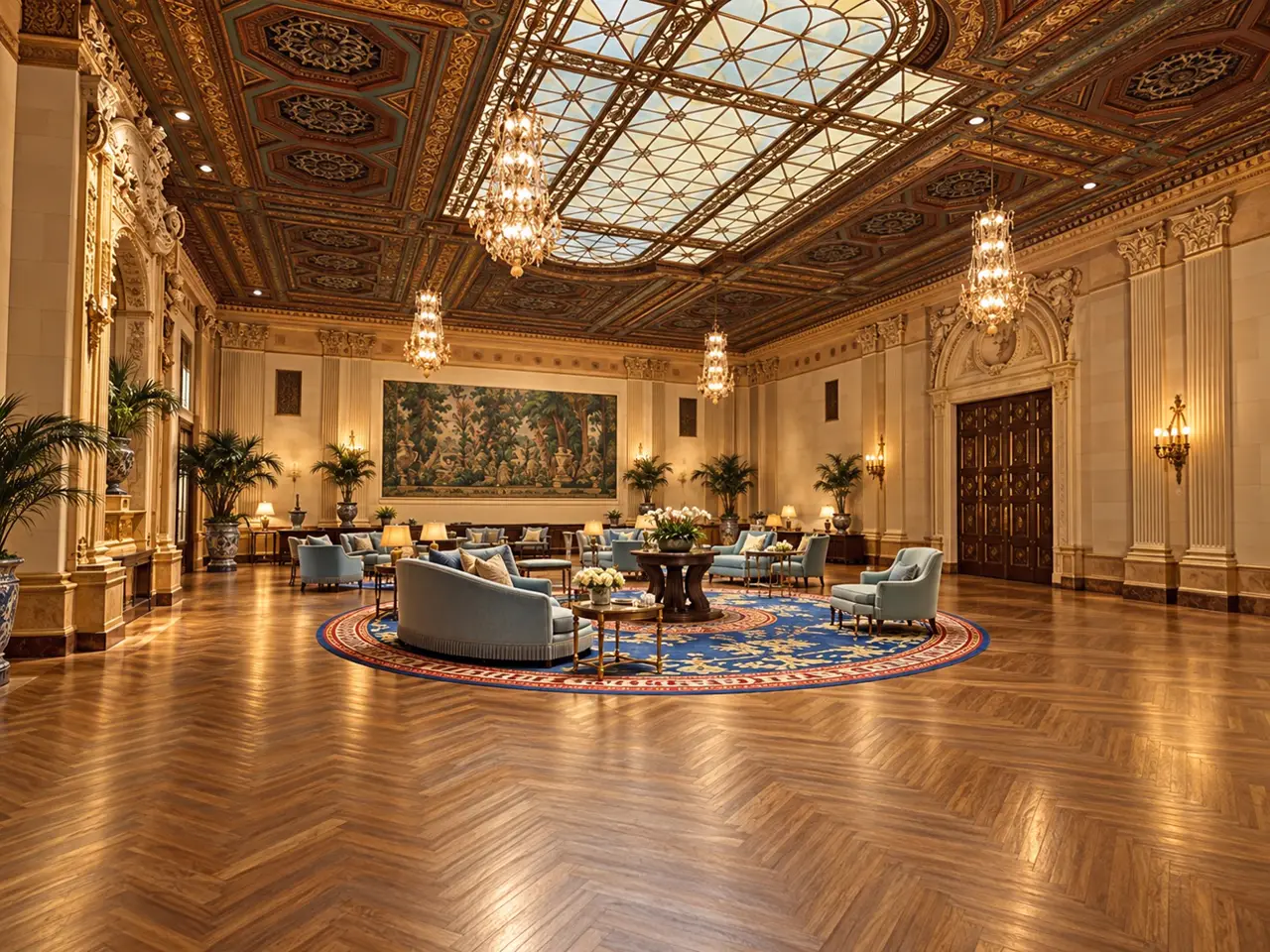 Biltmore · Music Room
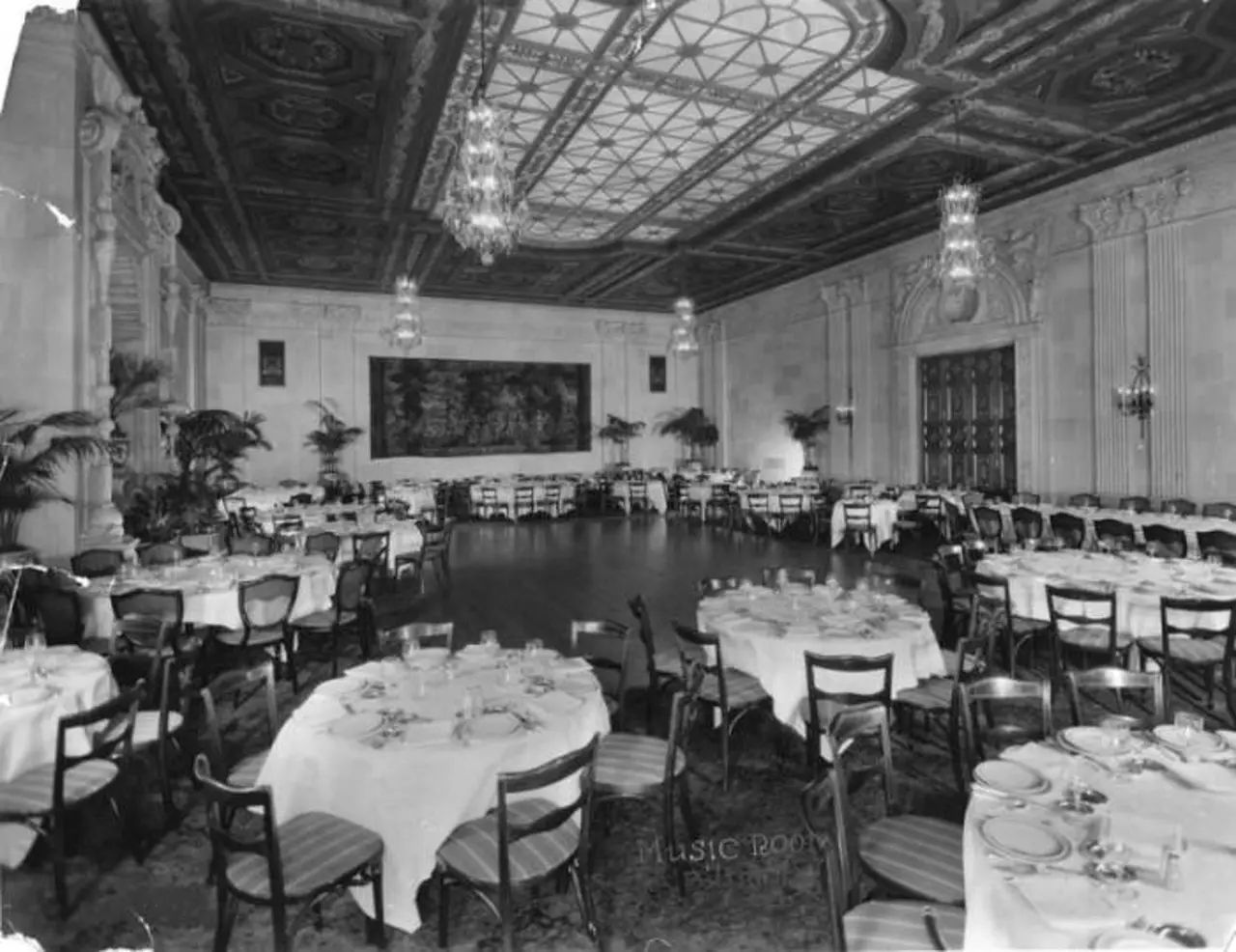
A lounge becomes a dining room again. Follow the mural, columns and oval skylight across the decades.
Original 1934 archive from the CLT Drive collection. Modern framing is an AI illustration based on the current room and archive.The place today. Tap to travel through time.
FROM THE SCREEN TO THE CITY
Your guide connects film stories with clips viewed in smart glasses. The route adapts to the open spaces of this working hotel.
The Biltmore appears as part of the Sedgewick Hotel sequence. Your guide connects the film’s comic chaos with the real hotel’s grand spaces.
Discover another screen identity for the Biltmore. Film connections explain how the hotel’s architecture can tell very different stories.
The operator’s itinerary identifies this entrance as a film location. Explore the relationship between noir, power and Los Angeles.
THE CITY HAS LAYERS
On this tour, smart glasses bring the images into the hotel spaces. Try an interactive preview.
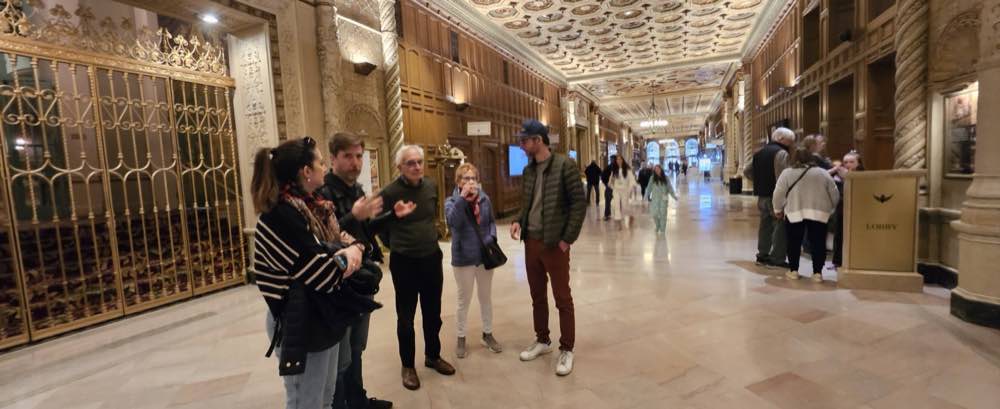 Biltmore · Galleria
The chandeliers, painted ceiling and long perspective of the Galleria become a music-video set. Reveal four seconds of Taylor Swift dancing in this real Biltmore space.
Real CLT guest photo and original production Immersia excerpt, 00:16–00:20. Different camera positions: a location comparison, not a precise architectural registration or a recording through the glasses.The place today. Tap to travel through time.
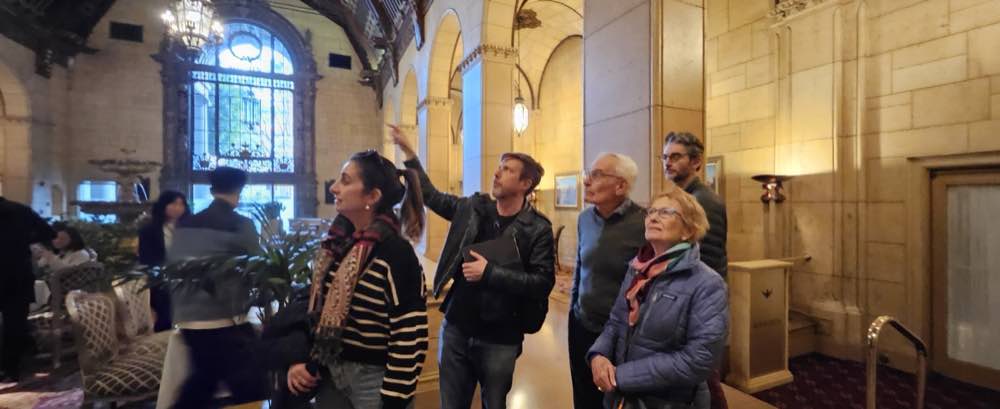
YOUR WALK, IN DETAIL
Landmarks from the operator’s published route. Order and access may vary with opening hours, events and local conditions.
Meet your guide for an introduction to the hotel and your viewing setup. The idea is simple: look at the real space, watch the film images connected with it in smart glasses, then compare the two. Provide your phone model when booking and follow the guide’s instructions at each viewing stop.
The former lobby introduces the hotel’s scale and decorative language. Look at the way the space frames an arrival: height, entrances and ornament make it feel ready for a scene before a camera is added. Your guide connects the architecture with the hotel’s cinematic identity.
In the long Galleria, the experience becomes about perspective. Follow the painted ceiling and the rhythm of the space, then consider how a filmmaker can use a gallery to suggest movement, luxury or anticipation. Film images are connected with the relevant accessible spaces at selected stops.
Look up at the decorated ceiling and discover the hotel’s social history.
Follow the hotel’s Academy connections through its historic corridor. Keep the chronology clear: the Biltmore hosted an Academy dinner in 1927 and later awards banquets; the first Academy Awards ceremony itself took place at the Roosevelt in 1929. Architecture and archive stories reveal different layers of Hollywood’s public image.
The operator’s itinerary links the Olive Street entrance to Chinatown. Step back from the idea of a generic grand hotel and look at an entrance as a piece of cinematic geography: what the camera includes, what it leaves out and how it establishes a world beyond the frame.
When accessible, the Crystal Ballroom gives the guide a setting for the Biltmore’s early Academy story and its grand event architecture. It hosted a 1927 Academy dinner, a different event from the first Oscars ceremony. As a working event space, the room may be unavailable on your tour date.
Discover the design and stories of another historic event space, when accessible.
Your meeting point: South Olive Street 507, Los Angeles
BEFORE YOU WALK
Stand in the real place, watch the connected film images in smart glasses, then compare what the camera shows with the architecture around you. The Biltmore tour uses the same core idea as the New York experience, in a compact one-hour route through one Los Angeles landmark. Your guide introduces the setup and the stories at selected viewing stops. The glasses are a way to see another layer of the hotel: a real room can become a fictional hotel, a different city or a very different mood on screen. They are used at stops, rather than as a reason to walk distracted through the building.
The Biltmore’s film connections are not all the same kind of scene. Ghostbusters gives the hotel a comic, fictional identity; Fight Club reveals a contrasting cinematic use of the same landmark; Chinatown connects the Olive Street entrance with a different portrait of Los Angeles. Rather than promising that every room contains every film, your guide connects the relevant stories and images to the spaces available on the day. Looking at entrances, corridors, ceilings and the movement between rooms helps you understand how filmmakers turn a working hotel into a screen world.
The Biltmore belongs to Academy history, but the first Academy Awards ceremony was held at the Hollywood Roosevelt in 1929. A 1927 Academy dinner took place in the Biltmore’s Crystal Ballroom, and the hotel later hosted awards banquets. These are different events, and the tour keeps them separate. The historic corridor provides a setting to explore the hotel’s relationship with Hollywood’s public image. Rooms used for private events, including ballrooms, remain subject to availability: the guide adapts the walk around a working hotel, rather than promising access to every named space.
IS THIS YOUR KIND OF WALK?
A good fit for film and architecture lovers who prefer a shorter experience in one hotel. Private rooms depend on hotel events. Provide your phone model during booking for the smart-glasses experience.
Compare all three LA experiences →MAKE IT YOUR NEXT STORY
Choose your date, guests and experience in our live Bókun calendar.
Calendar not loading? Open booking on Bókun
No dates for your day? Ask our team → Explore other walks →
REAL PLACES. A LOCAL GUIDE.
City Layer Tours was founded by filmmaker and urban storyteller Eloi Gerard. The images provide context; your guide connects scenes, architecture and stories on location.
Meet City Layer Tours →Read traveler experiences and independent booking listings.
Operator reviews · TripAdvisor ↗KNOW BEFORE YOU GO
Local guide and film-history presentation with smart glasses. Provide your smartphone model in Bókun. Room access depends on hotel operations.
[]
South Olive Street 507, Los Angeles
Millennium Biltmore Historic Hotel (Olive Street entrance on Pershing Square)
Review the cancellation terms for your selected rate in Bókun before payment.
Ghostbusters, Fight Club and Chinatown meet the ornate interiors of a Los Angeles landmark. A one-hour guided film-history experience, with clips viewed through smart glasses. Route landmarks: Welcome to the Biltmore Hotel, The Rendez-vous Court, The Galleria, The Music Room, The Historic Corridor, Olive Street Entrance, The Crystal Ballroom, The Gold Room. Route order and interiors subject to local conditions and opening hours.
FAQ
At selected stops, your guide connects film clips and images viewed in the glasses with the real hotel space around you. It is the same core principle as the NYC tour: stand in the place, watch, compare and hear the story. The website’s layer previews illustrate the idea rather than reproducing the exact glasses display.
The published tour explores Ghostbusters, Fight Club and Chinatown among the hotel’s screen connections. Chinatown is linked to the Olive Street entrance in the operator’s route. The guide adapts the precise viewing sequence to the spaces available.
No. The first Academy Awards ceremony took place at the Hollywood Roosevelt in 1929. The Biltmore hosted a 1927 Academy dinner and later awards banquets, which are separate chapters in Oscar history.
The itinerary names the Crystal Ballroom and Gold Room, but the Biltmore is a working hotel. Private events and hotel operations can restrict individual spaces, and the guide adapts the route. Every named room is not guaranteed.
Provide your exact phone model when booking so compatibility can be checked. Bring a charged phone and follow the requirements of the selected Bókun rate. A generic label such as “smartphone” is not enough to establish compatibility with display glasses.
It is a one-hour guided experience focused on the hotel’s interiors and film history, with the Olive Street entrance also included in the published route. Check the meeting point in your confirmation and arrive ready for the guide’s introduction to the viewing setup.
From $20
Explore more movie, TV and architecture stories with our other guided walks.
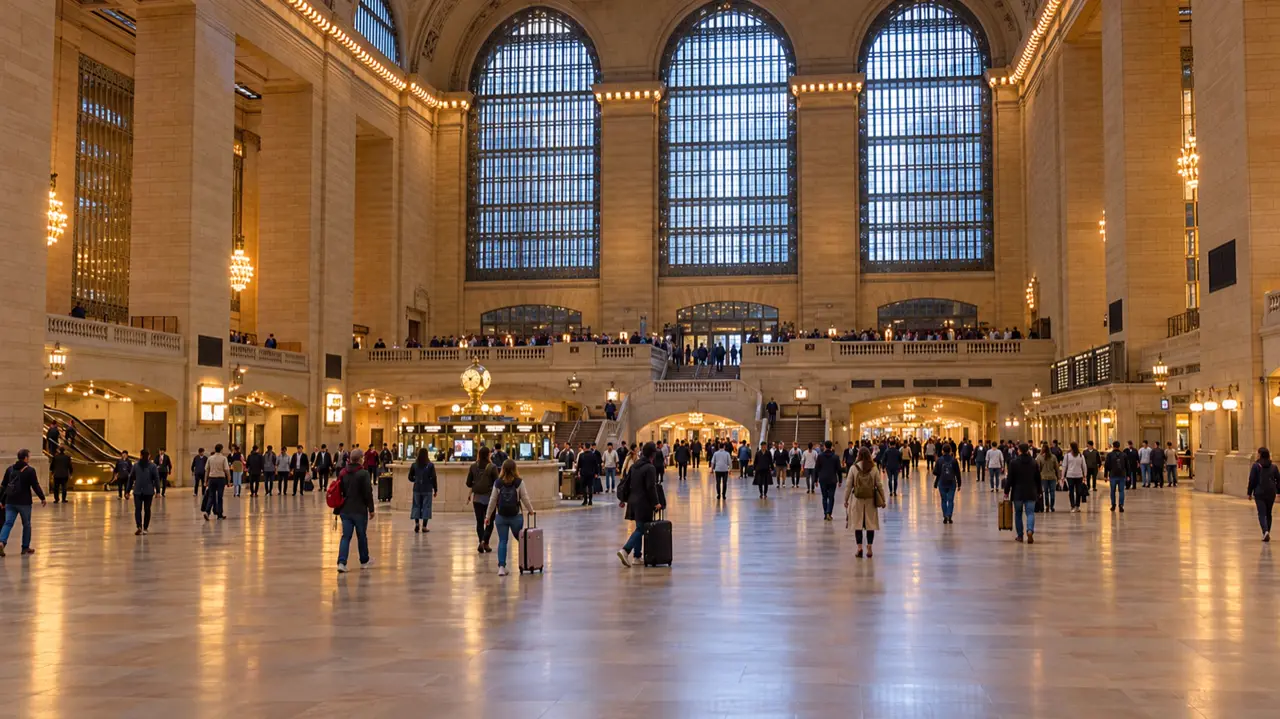
Midtown Manhattan, NYC
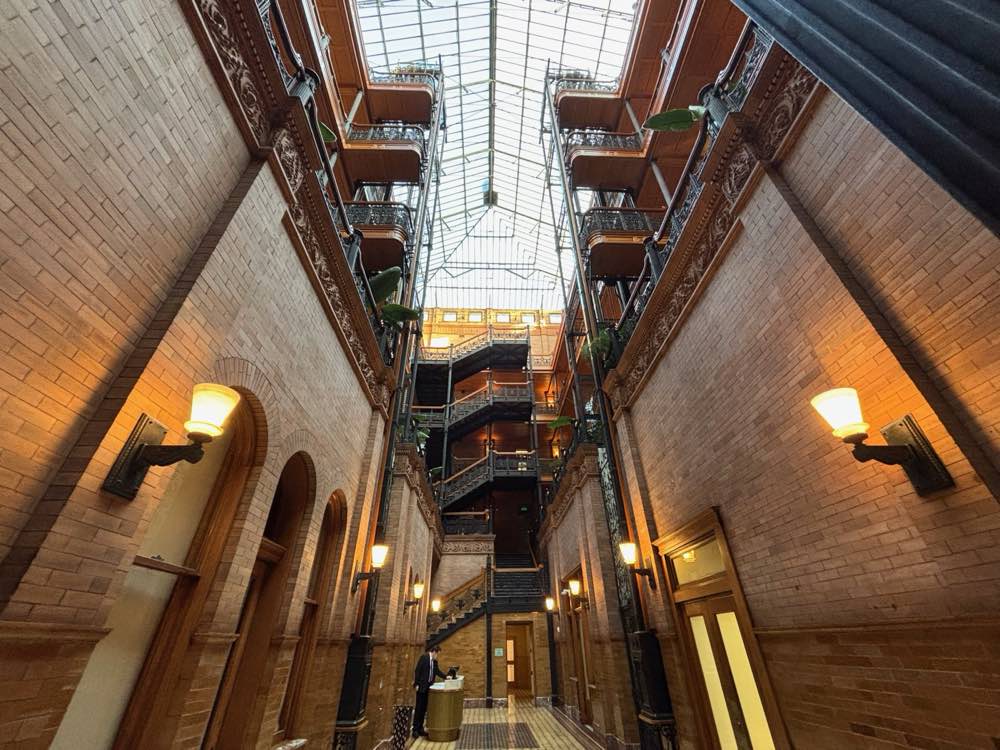
Downtown Los Angeles
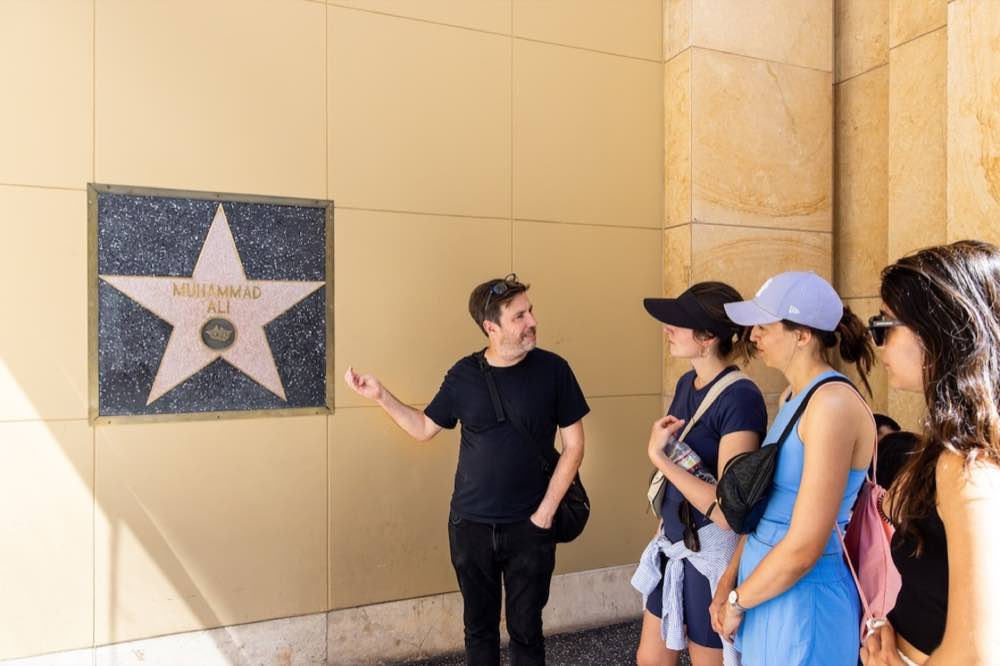
Hollywood Blvd